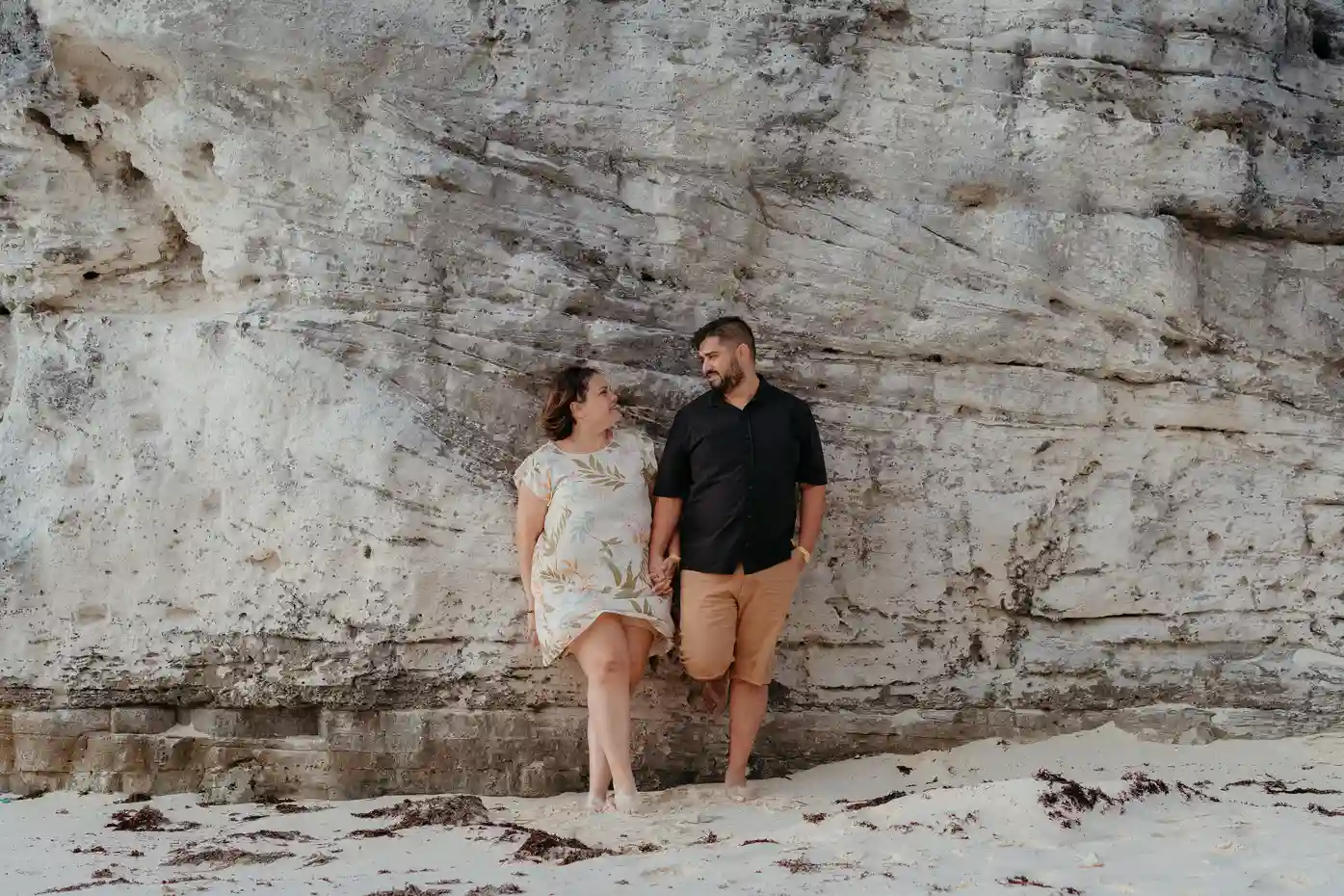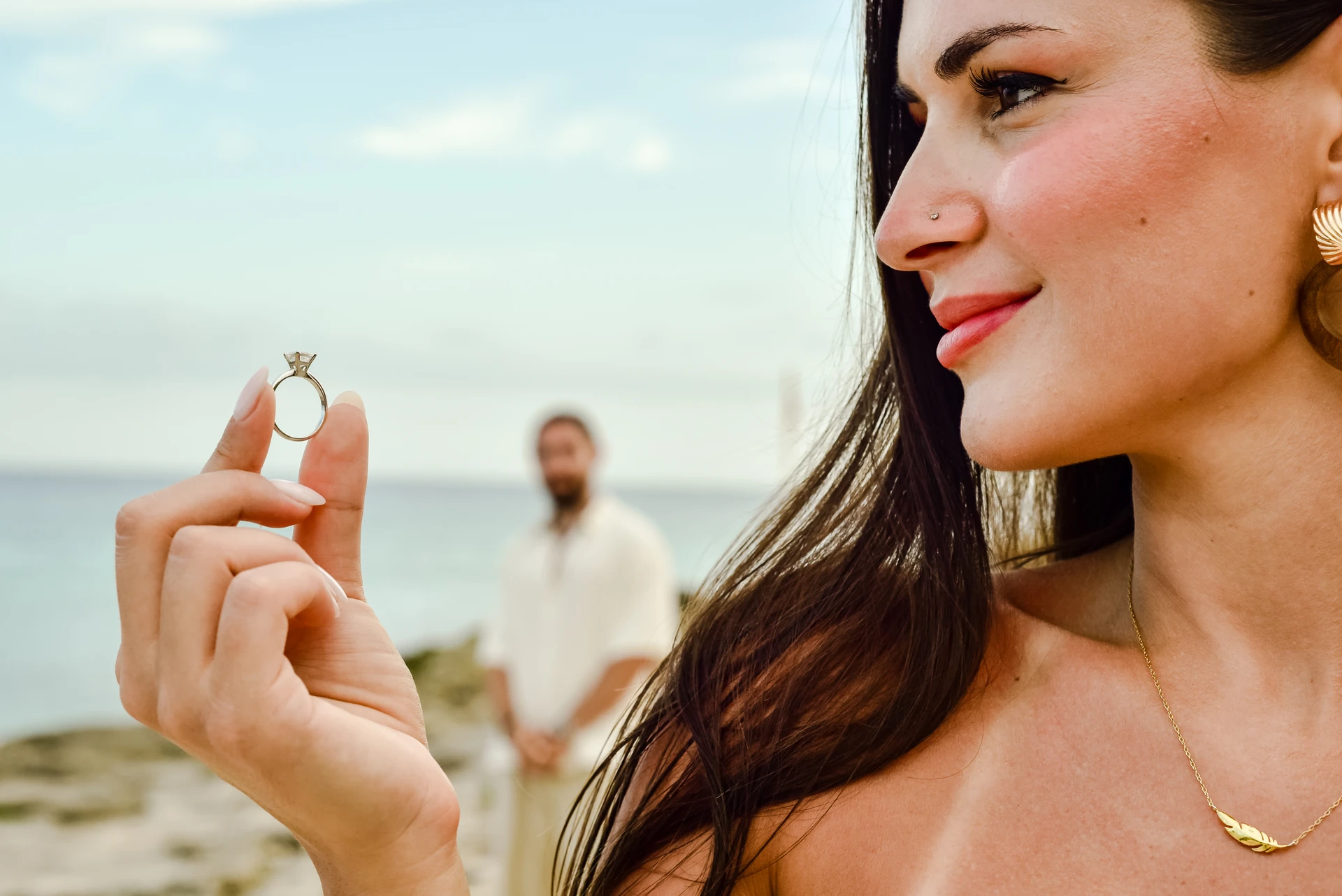
The ring has been in your sock drawer for three weeks and you still haven't worked out the one part that matters: how she doesn't see it coming. A proposal photographer in Cancún solves a different problem than a normal session. Nobody is posing. One person can't know the camera exists. And the whole thing has to happen inside the 45 minutes before sunset, on a beach you've maybe walked once.
This is the version we'd give a friend who asked how to do it right — what actually goes into hiding a photographer, reading your signal, and getting the drop to one knee on camera without tipping off the person you're about to ask.
The Surprise Is the Whole Job
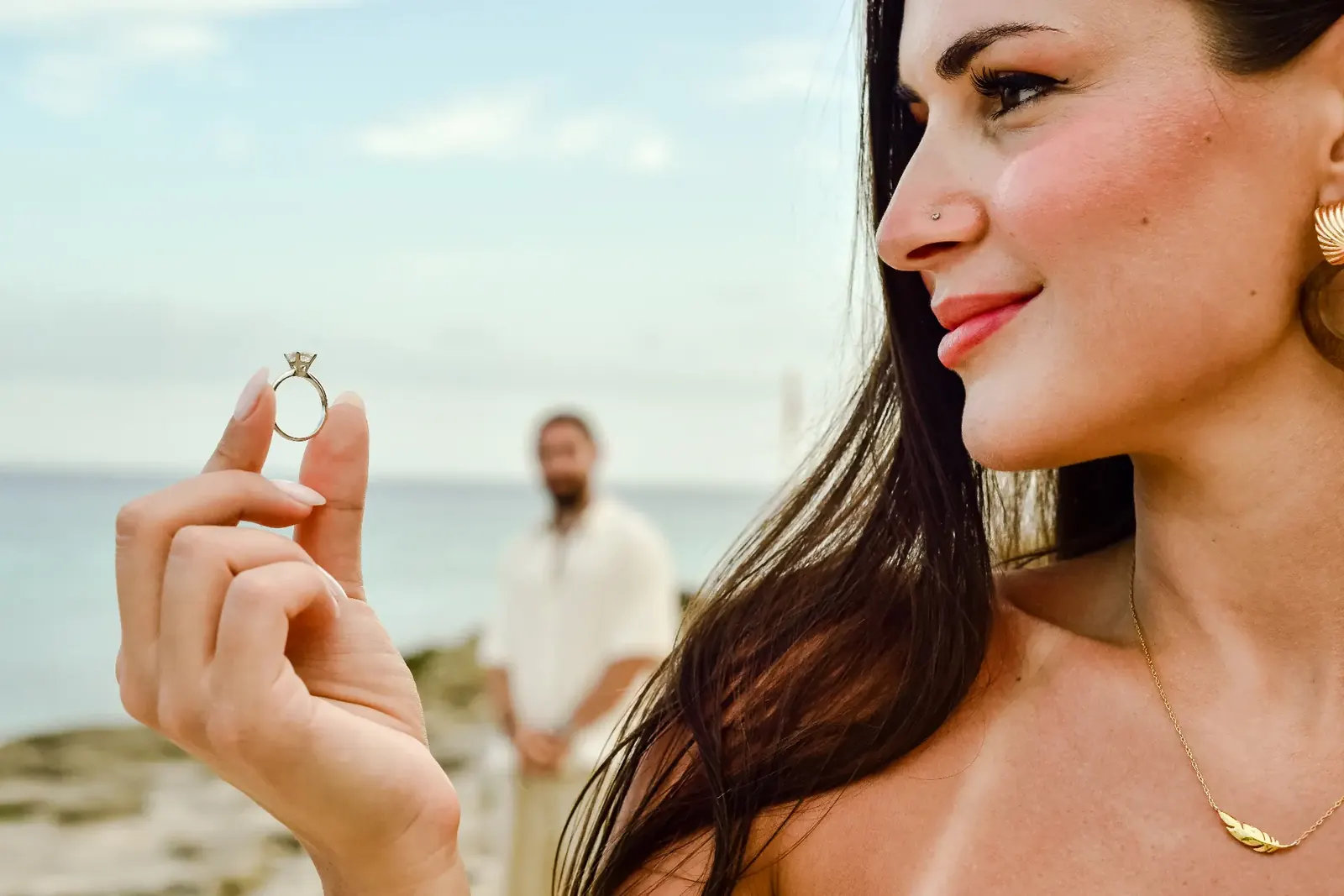
A normal session is a negotiation between two people and a camera. A proposal is a one-sided secret kept in plain sight, and the photographer's entire job is to be invisible until the exact moment they shouldn't be. That changes everything about how the shoot is built.
There's no warm-up, no “relax your shoulders,” no second take. You get one run at it, and the person being photographed can't be managed because she doesn't know she's being photographed. So the work moves earlier — into the planning. We talk through where you'll walk, which direction the light falls, and what the moment looks like from 20 meters away, days before you ever pull the ring out.
It also means we're shooting wide and continuous, not waiting for a perfect composed frame. The kneel happens fast. The reaction happens faster. Better to fire through the whole sequence and keep the one where her hands come up to her face than to compose carefully and miss it.
Where to Hide on a Public Beach
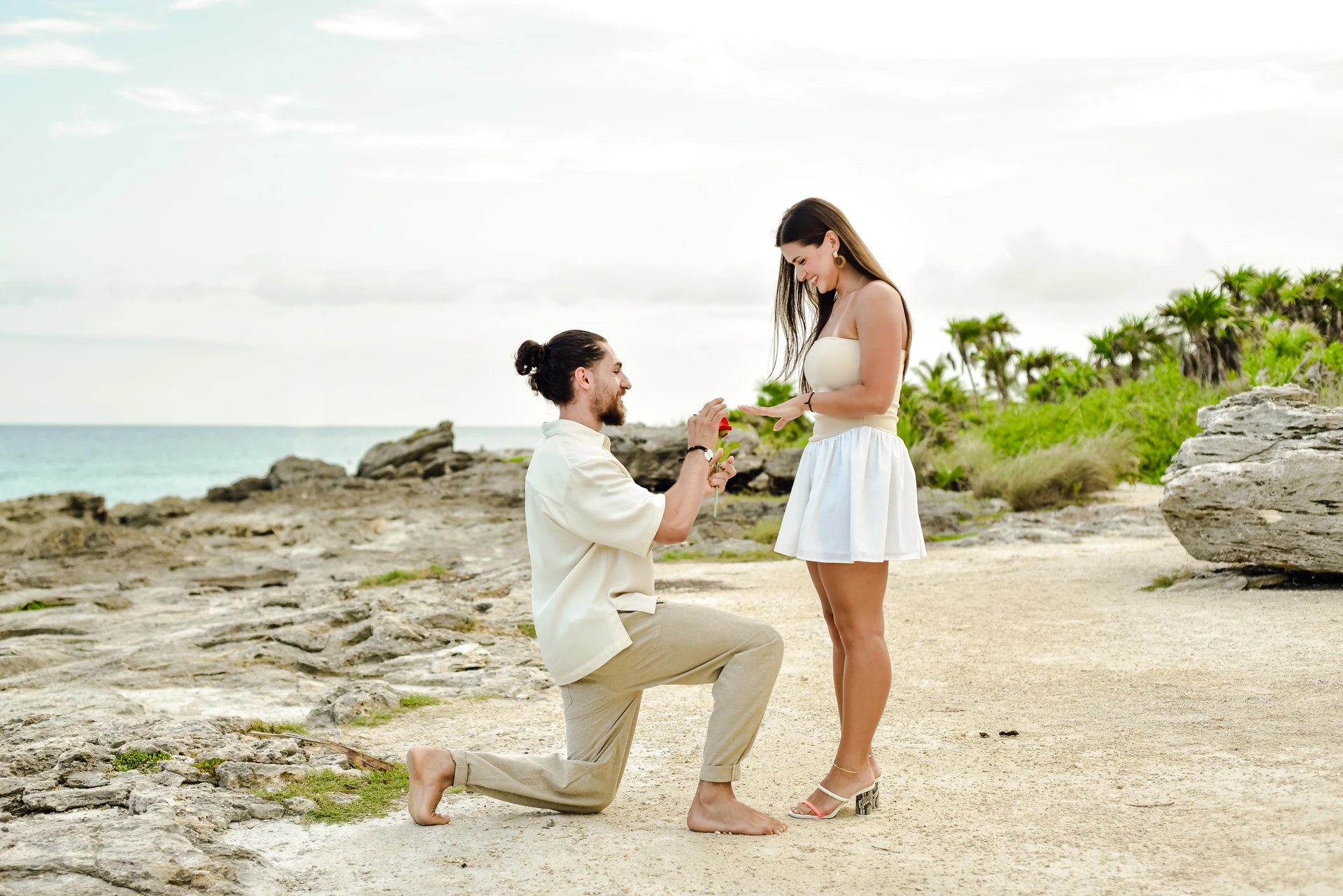
The trick to staying hidden isn't hiding. It's blending in. On a Cancún beach at golden hour there are dozens of people taking photos of the water — so a photographer standing 20 meters off with a long lens reads as one more tourist, not a threat to the surprise.
We arrive 15 to 20 minutes early, find a position 15–25 meters from where you'll stop, and work with a 70–200mm lens so there's no equipment anywhere near you. You walk your partner toward the spot we agreed on, framed against open water or low sun. From her side, nothing is happening. From ours, the shot has been set up since before you got there.
Location matters more than people expect. The hotel-zone beaches give you clean turquoise water and space to keep the photographer at a distance. Quieter stretches toward Playa del Carmen or Tulum trade the crowds for fewer strangers in frame. If you're staying at a large resort, check whether they charge an outside photographer fee before you plan the moment on their sand — some properties do, and it's easier to know now than at the gate.
“You're not hiding the camera. You're making it the most boring thing on a beach full of people taking pictures.”
The Signal We Agree on Beforehand
The single point of failure in a proposal shoot is timing. Start too late and you miss the kneel; the photographer who's watching for “about to speak” always starts too late. So we don't watch for the speech. We agree on a signal — something invisible to your partner that tells us the moment has started.
It's usually physical and small. A hand to the back pocket. Stopping at a specific palm. Taking your hat off and holding it. The instant you do it, focus is locked and we don't stop shooting until well after the answer. The rule is simple: trigger the signal when you reach the spot, not when you're ready to talk — we'd rather have ten extra seconds of you standing there than miss the drop.
The first ten minutes of any session are normally the worst — nervous, stiff, calibrating. A proposal inverts that. The nerves are real and the moment is real, so there's nothing to fake. That's the rare shoot where being unprepared on camera is exactly what makes the photos work.
After the Yes
The proposal is ten minutes. What most couples underestimate is the ten minutes after — the phone calls, the disbelief, the ring held up to the light, the long hug nobody's performing. Those frames are often better than the kneel, because by then everyone's forgotten the camera completely.
That's why we usually roll straight into a short couple session once she's said yes. You walk out of it with portraits you can send to family the same night, not just the proposal sequence. If you want something fuller down the line, an engagement session is the natural next step — and a couple photoshoot works the same way for anyone who's already married and just wants the trip on camera. Full pricing and session details live on the Roots Photography services page, and our Riviera Maya photographer overview maps where each spot along the coast works best.