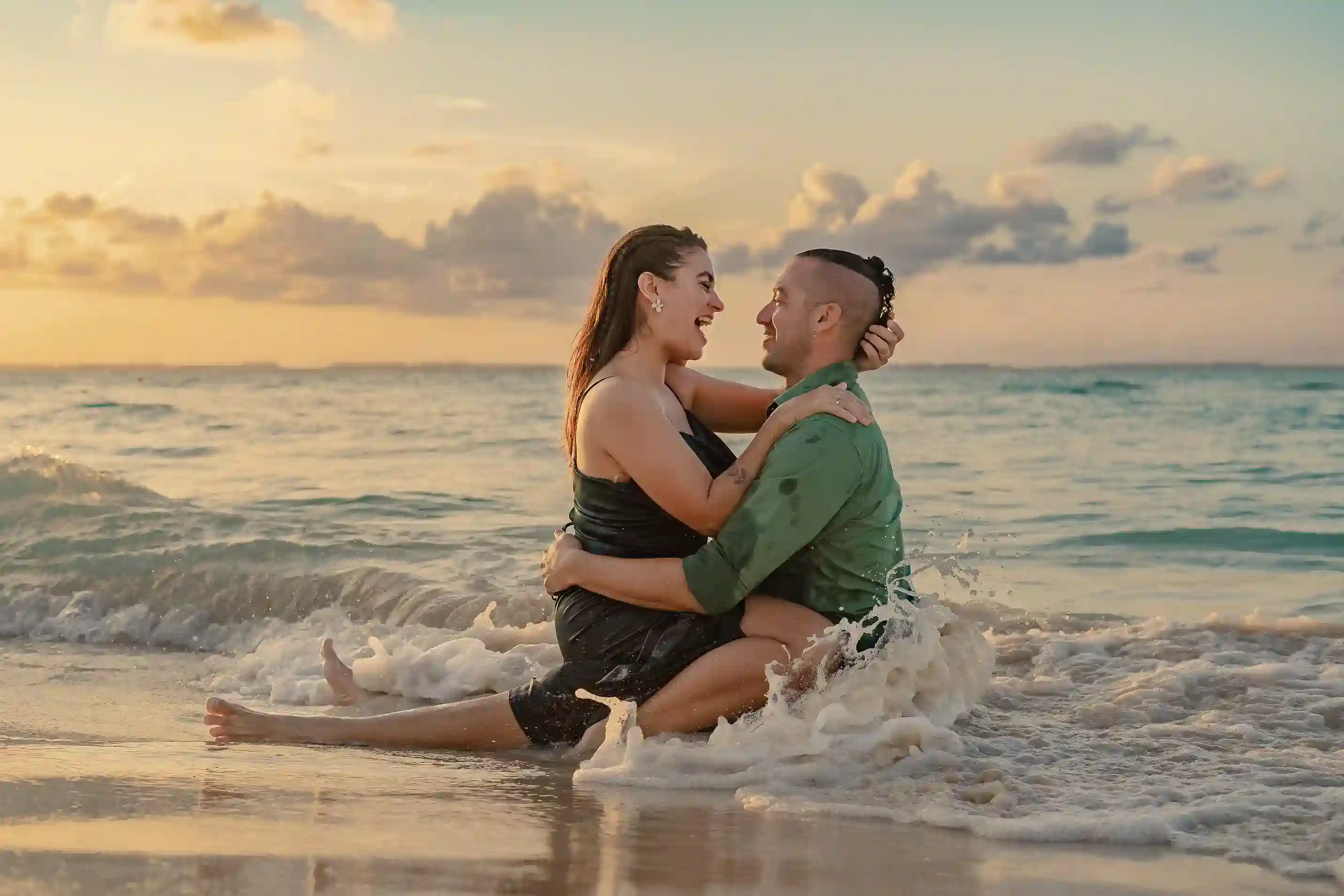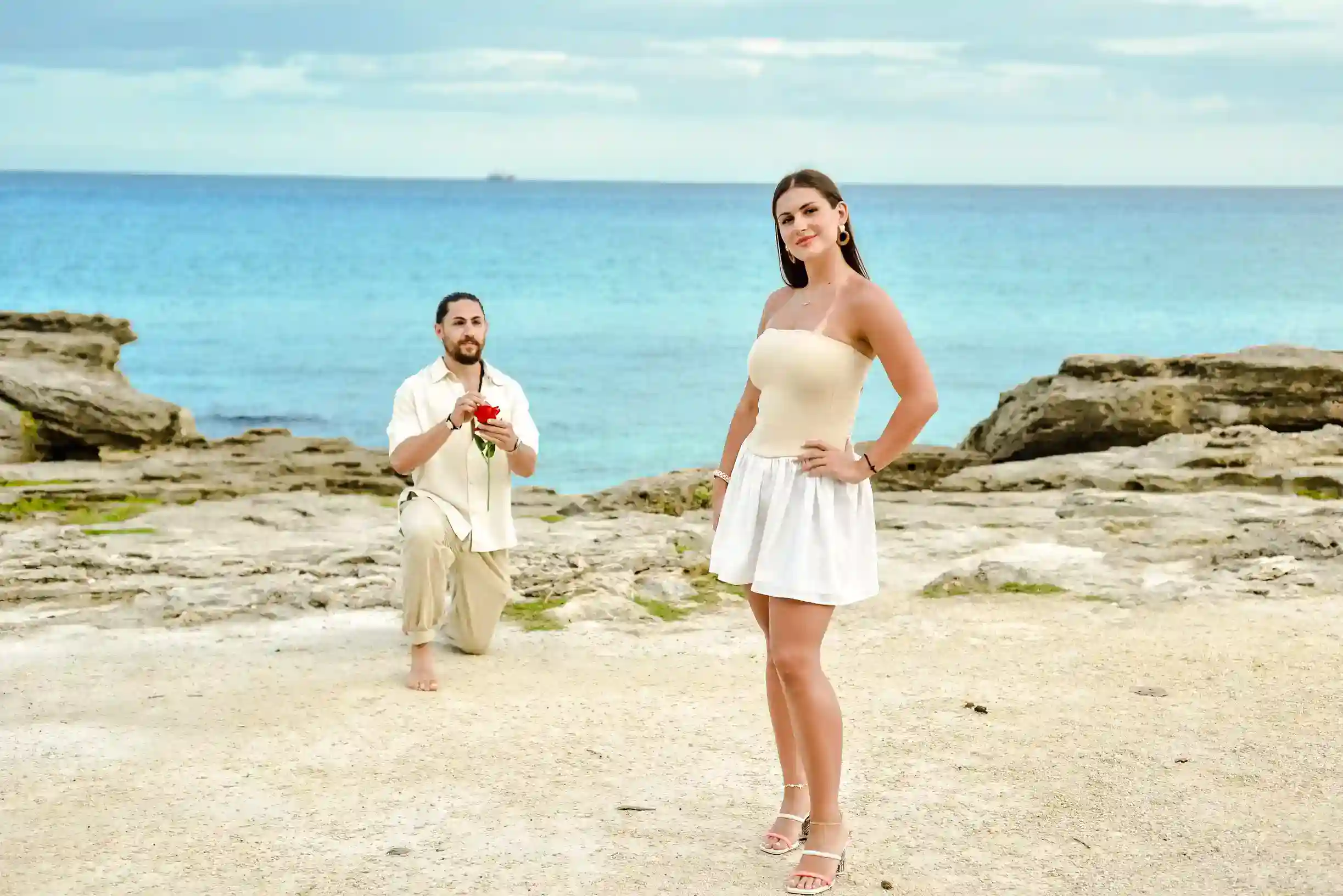
The outfit question comes up every time. Not because clients don't know what looks good, but because standing in front of your suitcase two days before a beach photoshoot in the Riviera Maya is a different problem from dressing for dinner. One wrong call and the photos look like a catalog. The right call and nobody notices what anyone is wearing — which is exactly the point.
Here's what actually works on white Caribbean sand, in late-afternoon gold light, with wind that does whatever it wants.
Palette Before the Outfit
Start with color before you pick a single piece. The backdrop — white sand, turquoise water, golden-hour sky — has its own palette, and your wardrobe either works with it or competes.
The tones that photograph best on a Riviera Maya beach are the ones that complement without shouting: warm creams, soft whites, sand, sage green, dusty rose, muted terracotta, and pale blues. These sit next to sand and sea without pulling the eye away from the people wearing them.
Avoid saturated primaries. A red shirt in a golden-hour beach photo draws the eye to the shirt, not the face. Neon does the same thing, harder.
The practical test: hold the outfit near a beige wall in daylight. If the wall and the piece feel like the same tonal family — warmer or cooler, but related — it'll work on the beach. If the fabric announces itself, leave it for dinner.
Coordinate, Don't Match
A couple or family in identical outfits reads like a team photo, not a portrait. The version that ages well is the coordinated one: same palette, different pieces.
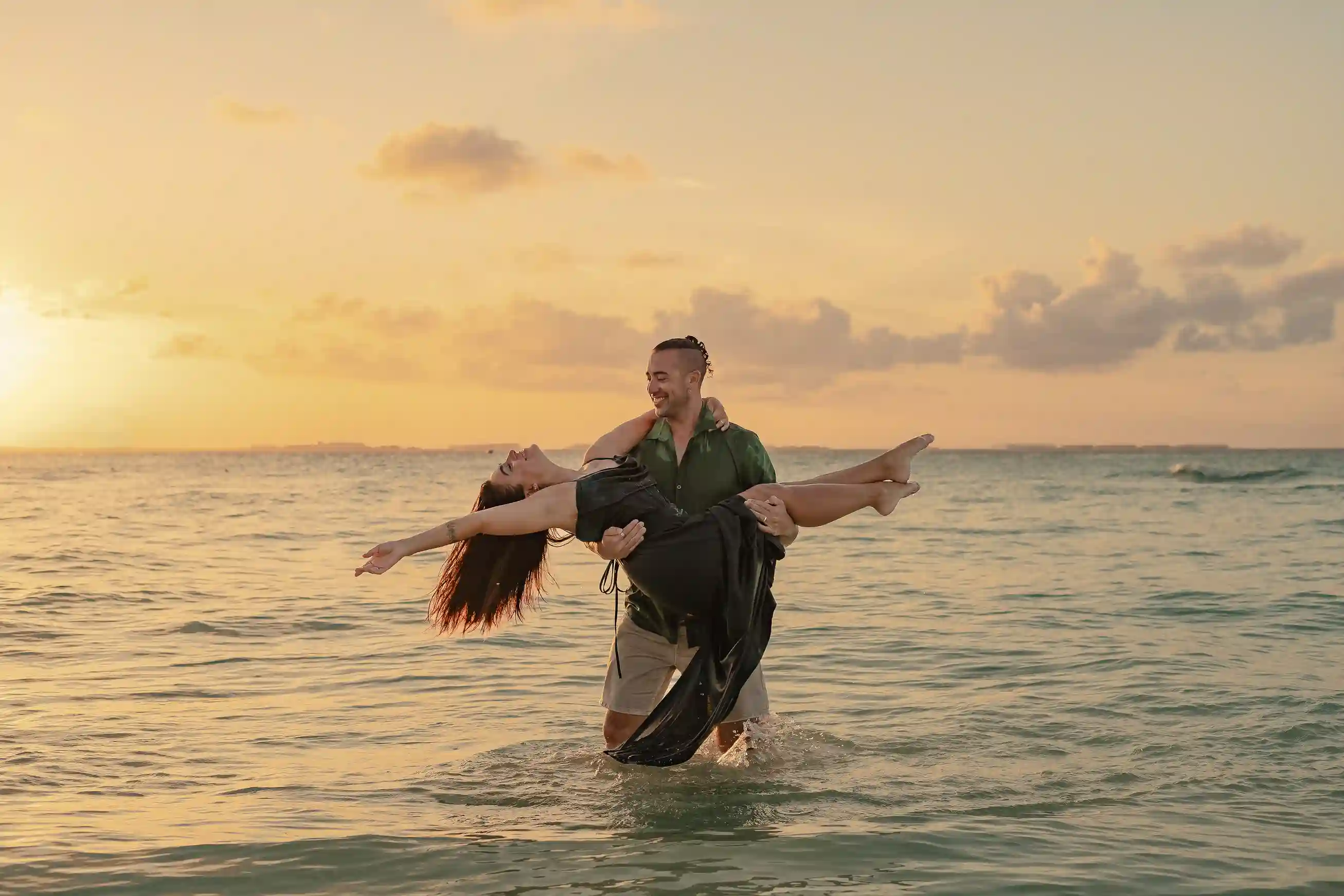
For couples: one person anchors the palette. If she's in a cream linen dress, he matches the tone — a warm taupe shirt, sand-colored trousers — not the fabric. They look like they got dressed in the same room, which reads naturally because they did.
For families: pick two or three tones and distribute them. Mom in dusty sage, dad in ivory linen, kids in white and a soft terracotta. The palette holds the frame together; the different pieces keep everyone looking like individuals, not a uniform.
The rule that always works: three tones maximum. One neutral, one warm, one accent — or a repeat of the neutral in a different texture. More than three and the frame starts to fragment.

“The best outfit for a beach photoshoot is the one nobody notices. That's how you know it worked.”
Fabric That Moves
The wind on a Riviera Maya beach is constant, and it's your best collaborator. Linen, cotton gauze, silk blends, and lightweight jersey all move with it. A flowing linen dress caught mid-step at golden hour looks like an editorial spread. A stiff cotton shirt at the same moment looks like a passport photo.
Avoid thick denim, tailored cotton, and polyester. They hold shape well in a boardroom and read rigid on sand. It's not that they look bad — it's that they miss the loose, free quality the beach gives you for free.
Practical bonus: linen breathes. Sessions run outside at 80°F, and nobody photographs well when they're visibly uncomfortable. If you're sweating at minute five, it shows at minute twenty.
Feet, Layers, and Accessories
Go barefoot when you can. Most beach photoshoots end up without shoes by frame twenty anyway — sand inside sneakers is a problem that compounds throughout the session. If you need footwear for the walk in, a simple leather sandal you can slip off is the right call. Not trail sneakers. Not platform wedges.
Hats add depth. One hat in a group photo creates a visual anchor; every head covered reads like a costume. One person wearing a wide-brim straw hat, everyone else without — that's a good frame.
Keep jewelry minimal. One statement piece per person: earrings and a ring, or a necklace and nothing else. Everything together competes with the face. The face is the whole reason you're here.