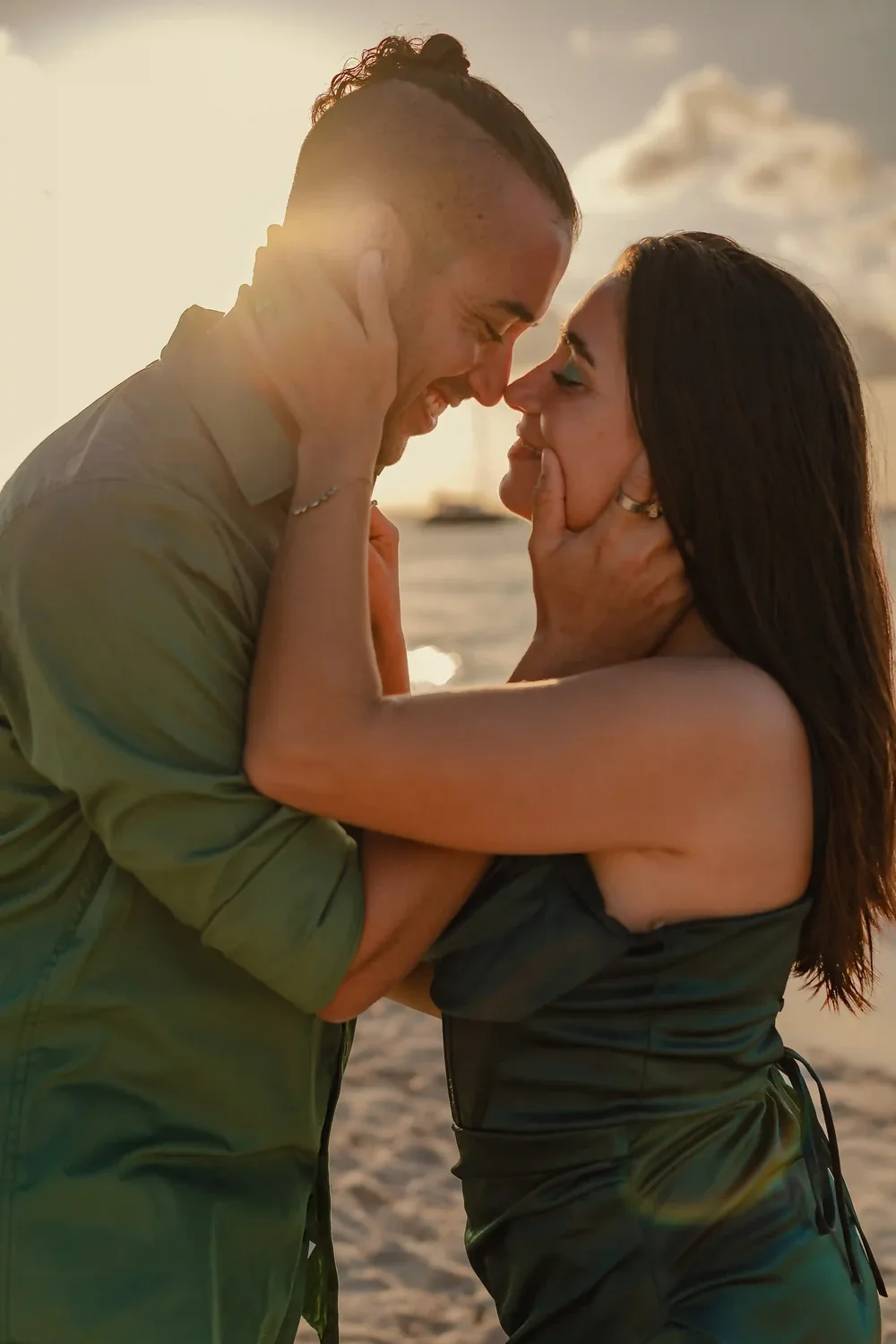
Two photos of the same beach can look like two different countries. One is bleached, flat, shot at 1pm with the sun straight overhead. The other has long shadows, warm skin, and water that actually reads turquoise. Good Cancún photography is almost entirely the difference between those two frames — and most of that difference is decided before anyone picks up a camera.
This isn't a guide to hiring anyone. It's a guide to seeing: what makes an image look like it belongs to this coast, why the same spot works at 6pm and fails at noon, and which kinds of sessions the Riviera Maya was built for.
The Light Is the Whole Story
The light at noon on a Caribbean beach is unusable. Not difficult — unusable. It's flat, high, and drops shadows directly under the eyes of anyone standing in it, and no amount of editing pulls a good frame back out of it.
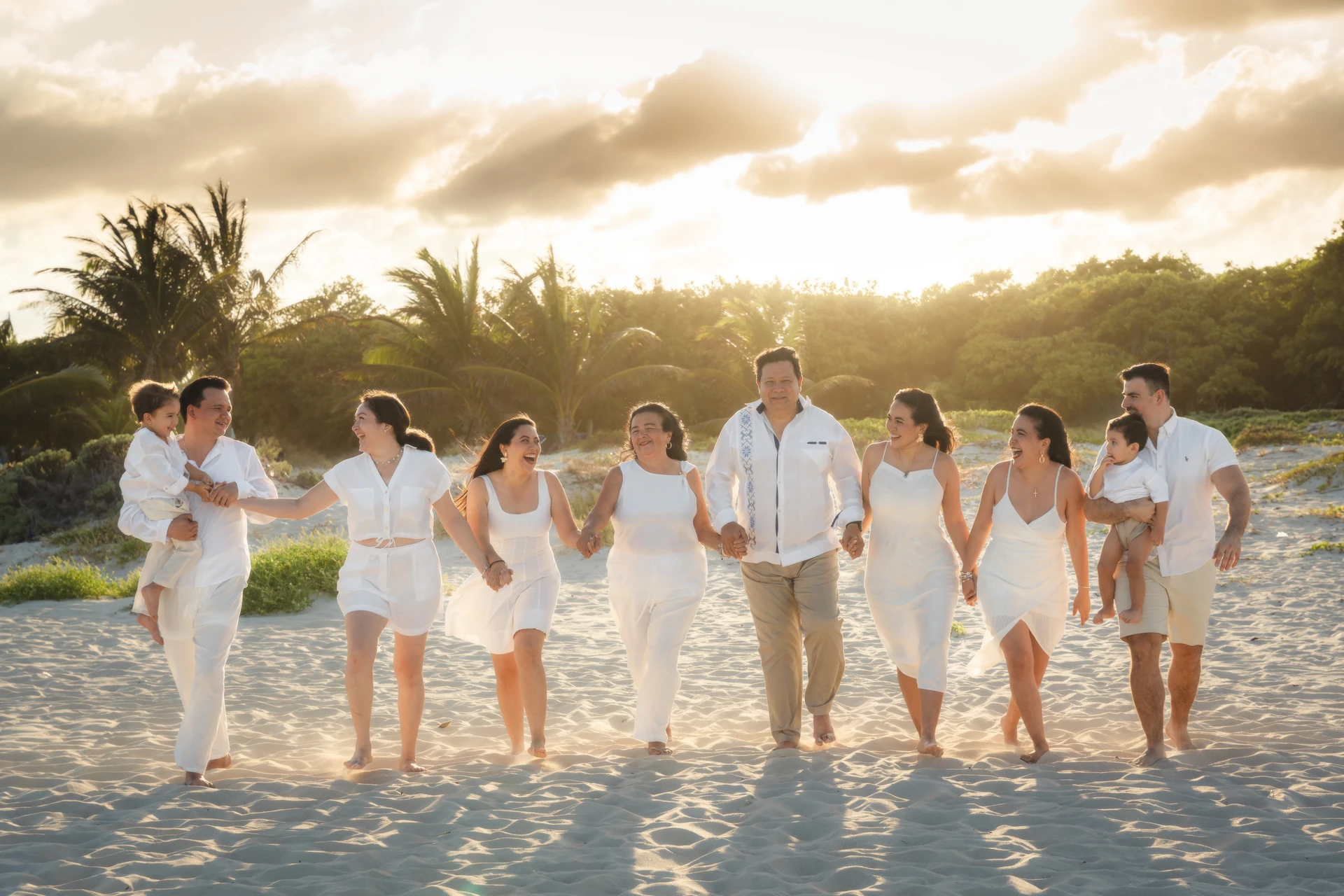
The fix is simple and non-negotiable: shoot at the edges of the day. Golden hour on this coast runs from roughly 5:30pm in December to a little past 7pm in June, and sunrise gives you the same soft, low light with an empty beach in the bargain. That two-hour window is where nearly every image you actually like was taken.
You can see it in a portfolio without knowing a thing about cameras. Warm, directional light and clean shadow means the photographer knows the schedule. Everything looking a little pale and tired means they didn't — and it could have been shot anywhere.
“Location gets all the credit and light does all the work. Move the same shoot from 1pm to 6pm and it stops looking like a stock photo.”
Where the Backgrounds Come From
The coast isn't one backdrop. It's four or five, each with its own palette, and picking the right one matters more than people expect.
The Cancún hotel zone gives you the postcard: wide white sand and that impossible turquoise. Head south and Tulum trades crowds for jungle, ruins, and darker rock — moodier, less polished, more editorial. Playa del Carmen sits in the middle, a walkable town with a calmer beach. And the cenotes give you something almost nobody plans for: clear freshwater, cave light, and a cool blue-green palette that looks nothing like the ocean twenty minutes away.
The Riviera Maya is close enough end to end that a session can borrow from two of these in one evening. We usually lock one primary spot and one backup a short drive off, so a cloudy sky or a crowded beach never ends the shoot.
The Styles That Actually Work Here
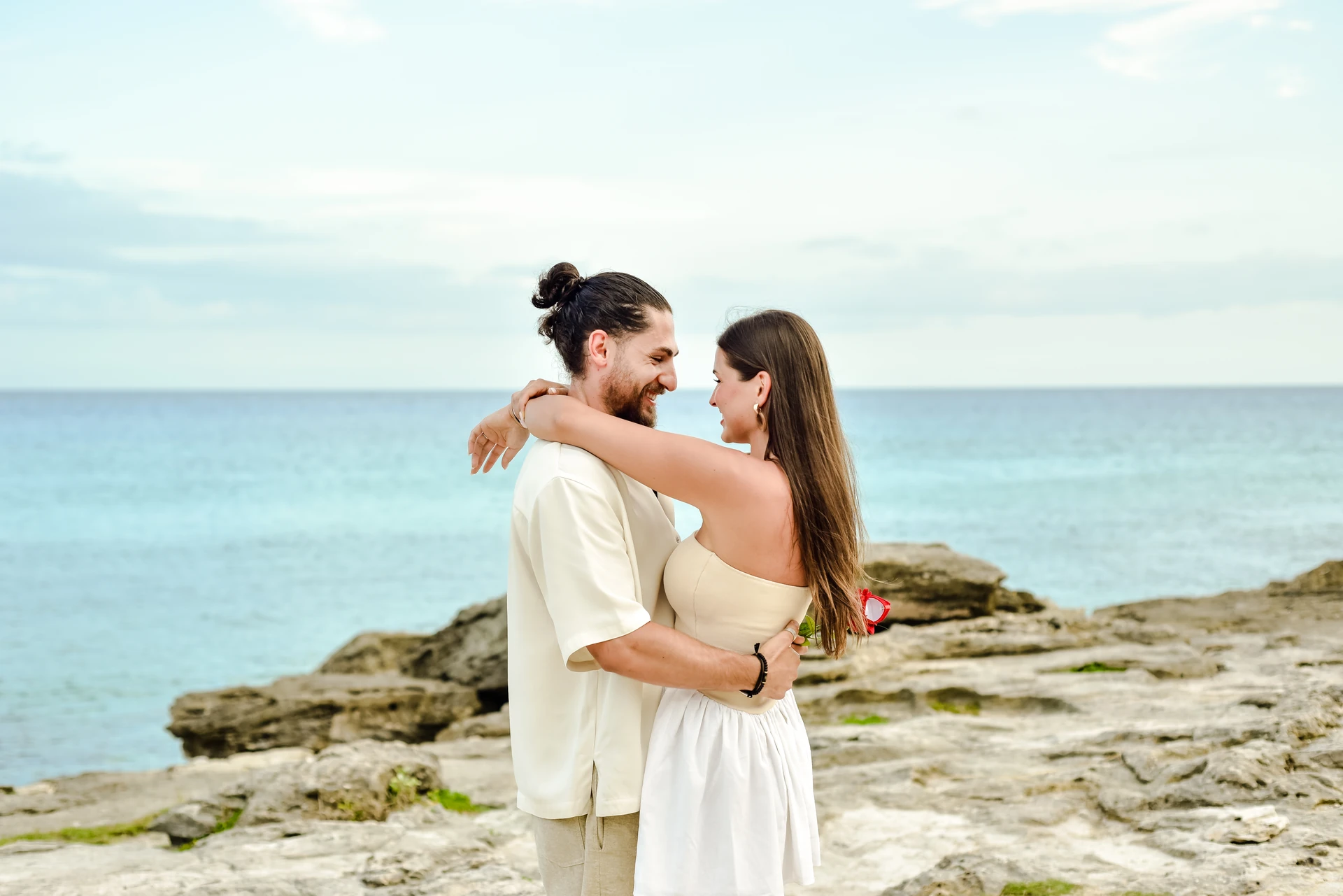
People fly in for a specific set of sessions, and the ones that work share a trait: they're built around movement, not poses. A couple walking the waterline. Kids running until they forget the camera. A mother-to-be at the edge of the surf. The beach is too big and too bright to stand still and stiff on — the documentary approach isn't a style choice here so much as what the place demands.
Couples are the bulk of it — honeymoons, anniversaries, and engagement sessions where the ring finally gets its frame. Families come for the once-a-year photo where everyone's actually together, and the trick with kids is to stop directing and start following. Maternity sessions use the same low light and open horizon to their advantage. What ties them together is that the strongest frame is almost always the unplanned one — the laugh between setups, not the setup.
One quiet variable decides a lot of it: what everyone wears. Colors that fight the water or clash across a group pull the eye straight to the clothes. We wrote a whole piece on what to wear for a beach photoshoot because it changes the result more than any camera setting.
How to Read Cancún Photography in a Portfolio
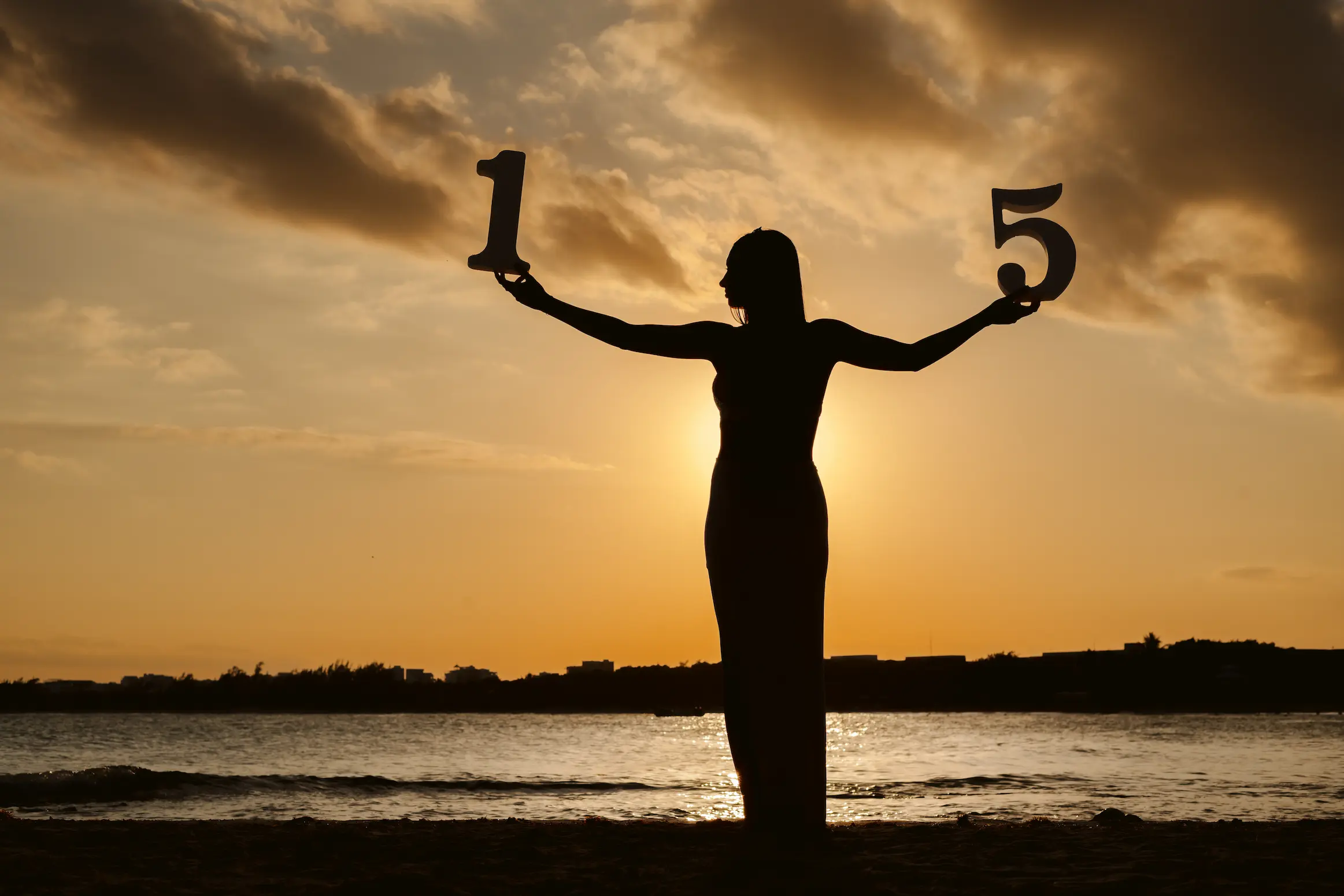
Once you know light and location do most of the work, a portfolio gets easy to read. Look at the shadows first: soft and directional means golden hour, harsh and overhead means whoever shot it took whatever time was convenient. Look at the water — real turquoise only shows up in good light, so a washed-out sea is a tell.
Then look for range. A photographer who only shows the same hotel-zone frame over and over may not actually know the coast; one who moves between beach, jungle, town, and cenote knows where to take you when the obvious spot is packed. And watch the faces. If everyone looks posed and a little frozen, that's the style you'll get. If they look like they forgot the camera was there, that's the harder thing to fake — and the thing worth booking for.
When you're ready to move from looking to hiring, we put the practical side — how to vet a shooter, beach-access rules, session types — in a separate guide on choosing a Cancún photographer. If you're staying at a big resort, check whether they charge an outside photographer fee before you plan the shoot on their sand. Full session details and pricing live on the Roots Photography services page.