
Two people can stand on the exact same stretch of sand, in the same outfits, and walk away with photos that look like they came from two different trips. The only variable that changed was the clock. The best time of day for beach photos on this coast isn't a preference or a style choice — it's the difference between warm, soft frames and washed-out ones the editing can't save.
So here's the short version before the long one: shoot at the edges of the day. The rest of this is why, and how to pick between the two edges you get.

Golden Hour Is the Answer — Here's the Window
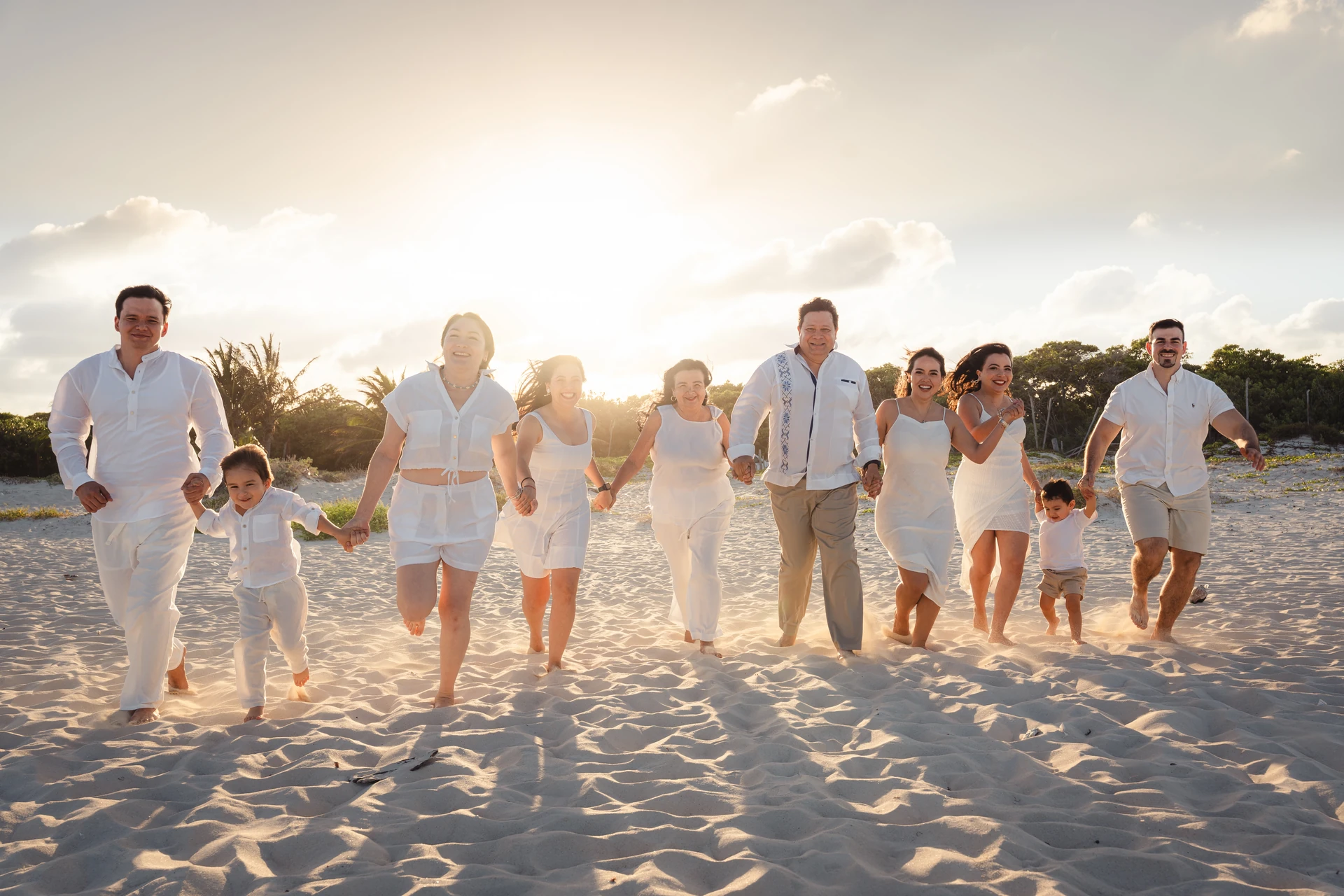
Golden hour is the hour after the sun rises and the hour before it sets, when the light comes in low and sideways instead of straight down. It wraps around faces, warms skin, and lets the Caribbean actually read turquoise instead of a bleached grey-blue. Every frame you've ever liked from this coast was almost certainly shot inside one of those two windows.
The catch is that the window moves with the season, and it's shorter than people think. In December, evening light gets good around 5:00pm and the sun is gone by 5:30. In June, that same window slides to roughly 6:30pm with the sun setting past 7:00. Twenty minutes of lateness in winter can cost you half the session — which is why we check the exact times for your date before we set a call time.
“The beach gets all the credit and the clock does all the work. Move the same shoot three hours and it stops looking like a stock photo.”
Sunrise or Sunset: How to Choose
Both ends of the day give you the same soft, directional light — physically, sunrise and sunset are mirror images. So the choice isn't about quality. It's about everything that surrounds the light: crowds, temperature, water, and how your particular group behaves.
Sunrise wins on emptiness. The hotel-zone beaches that are shoulder-to-shoulder by afternoon are yours alone at 6:30am, the air is cool, and the water is usually at its flattest. The price is the alarm clock. Sunset is the opposite trade — easy to show up for, warmer and more saturated in tone, but busier and quicker to fade once the sun drops below the horizon.
For families with young kids, sunrise almost always wins: children are fresh, the heat hasn't started, and nobody's melting down before dinner. Couples usually lean sunset, and that's fine — a honeymoon rarely wants a 5am start. Neither answer is wrong. The right one depends on who's standing in front of the camera.
Why Midday Almost Never Works
The light at noon on a Caribbean beach is unusable. Not difficult — unusable. It comes straight down, drops hard shadows directly under the eyes, and burns the sand and water into a flat white glare. It's the one lighting condition no amount of skill or editing pulls a good frame back out of.
There are two real exceptions, and only two. Open shade — under a palapa, a colonnade, or dense tree cover — gives you soft, even light at any hour. And a fully overcast sky turns the whole thing into a giant softbox, which is why a grey day is not the disaster people fear. What doesn't work is bright open sand under a high sun. If midday is genuinely your only window, we shoot in shade or move the session rather than pretend the light will behave.
Planning Around the Light
Once you accept that the clock decides everything, the rest of the plan falls into place around it. We lock the session to the good window first, then work backward: which beach faces the right way, how long the drive is, where the backup spot sits if the primary is crowded. The light is the fixed point; everything else bends to it.
A few things stack on top of good timing. What everyone wears changes the result more than any camera setting, which is why we wrote a whole piece on what to wear for a beach photoshoot. Location matters too — the Cancún hotel zone, the calmer beaches of Tulum, and the town beaches between them each read differently in the same light. If you want the deeper version of how light and place combine, we broke it down in what makes an image look like it was taken here. Session details and pricing live on the Roots Photography services page.
The mistake almost nobody thinks they're making is booking the shoot around their own schedule instead of the sun's. Pick the light first. The photos you keep for the next thirty years are worth an early alarm or a delayed dinner.